JournalArticleInterior3 min read
Materials that age well in tropical air
Humidity and salt air are hard on finishes. Choosing materials that weather gracefully is one of the quiet decisions that shapes how a Bali house looks in ten years.
A house in Bali lives in conditions that many materials were never designed for. Relative humidity often sits between seventy and ninety percent. Near the coast the air carries salt, and sunlight is strong enough to bleach timber and soften cheap sealants within a couple of seasons. A finish that looks perfect at handover can look tired surprisingly quickly.
The good news is that the island also has long experience with materials that cope well. The skill lies in using them where they suit and protecting them where they need it.
Timber
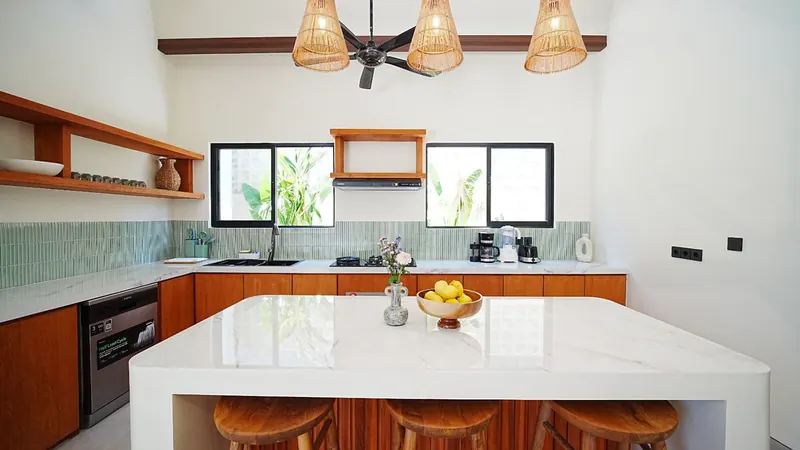
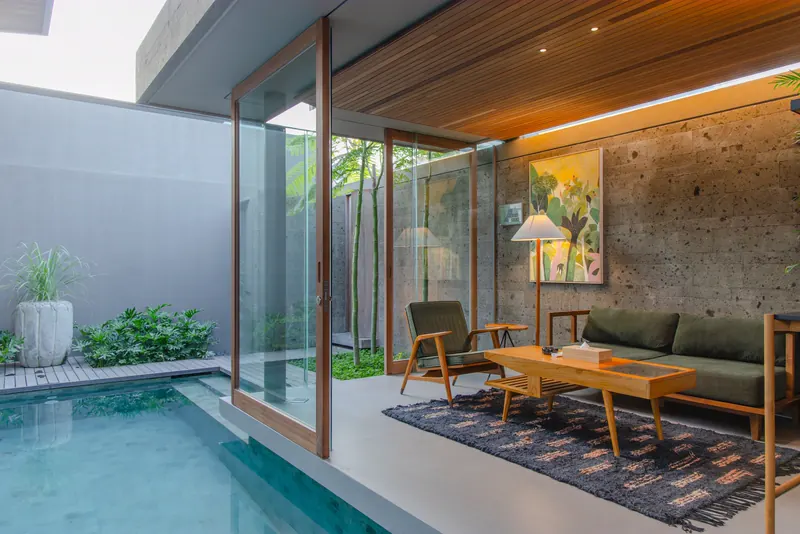
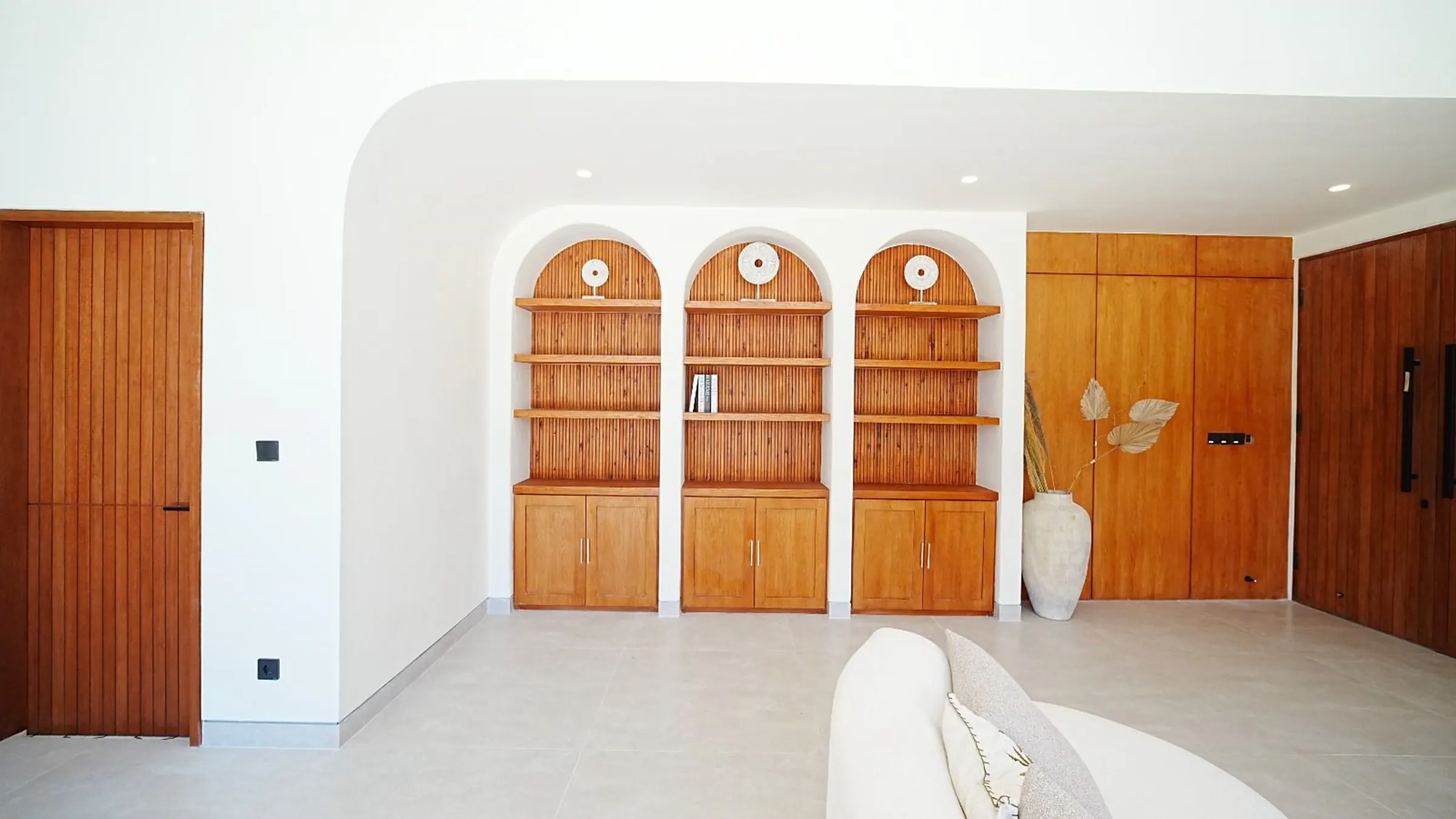
Teak remains the benchmark for good reason. Its natural oils resist moisture and insects, and it moves less than most woods as the humidity changes. Merbau and bengkirai are common for decking and outdoor structures. Inside, we avoid standard MDF in wet areas and use moisture resistant boards or marine plywood behind veneers, because ordinary board swells at the edges once humidity finds its way in.
Wherever timber is used, ventilation matters as much as species. A wardrobe built tight against an external wall with no air gap will grow mould whatever the wood.
Stone and terrazzo
Local stones each have their place. Paras, a soft volcanic stone, carves beautifully and gives walls a warm texture, but it is porous and needs sealing wherever it meets water. Andesite and other dense stones handle foot traffic and pool edges far better. Polished marble is lovely indoors, yet it etches easily under acidic cleaners and fruit juice, so we think carefully before specifying it in kitchens.
Terrazzo, cast on site or laid as tiles, has become a favourite because it pairs durability with a wide palette and asks for little more than periodic resealing.
Metals and fittings
Within a few kilometres of the sea, ordinary stainless steel can show rust spots within months. For exposed fittings near the coast we specify marine grade 316 stainless steel or powder coated aluminium. Brass and bronze develop a patina that many owners come to love, provided they know to expect it.
Good drip edges and generous eaves do more for a facade than any coating.
Plaster and paint
Lime based plasters breathe, which helps walls release moisture instead of trapping it behind a plastic film. Where we use paint, we choose breathable exterior systems and detail the walls so water runs off them instead of soaking in.
Designing for patina
Some change is inevitable in this climate. The aim is for materials to age into character, the way old teak darkens and stone softens, instead of failing outright. BODE Interior makes these choices alongside the structure, so the right material meets the right exposure from the start. You can see more of how we approach finishes on the BODE Interior site.