JournalArticleSolar3 min read
What a Bali roof receives from the sun
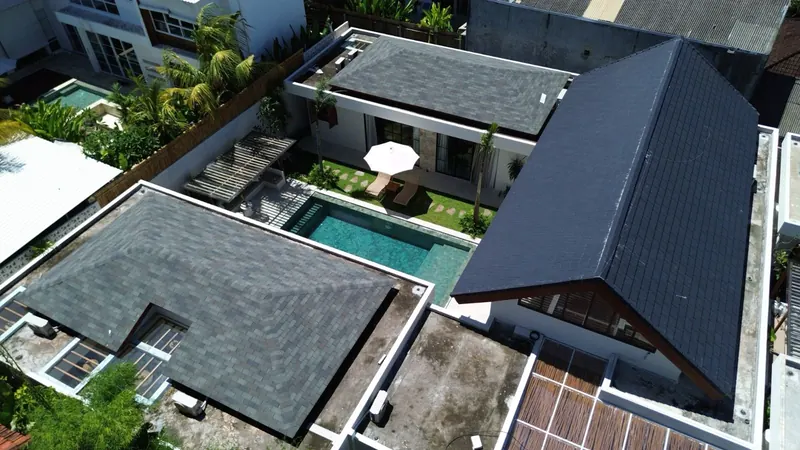
Before anyone talks about panels or prices, it helps to know how much energy actually lands on a roof in Bali, and how much of it a building can use.
Solar conversations often begin with equipment: panel brands, inverter models, battery chemistry. We prefer to start one step earlier, with the sun itself. Once you know how much light reaches your roof, and when, most of the later decisions become easier to reason about.
Peak sun hours, explained plainly
Sunlight changes through the day, so solar engineers simplify it into a single figure called peak sun hours. One peak sun hour is the energy a square metre would receive during an hour of strong midday sun. A day with five peak sun hours delivers the same total energy as five hours at that midday strength, even though the real sunshine was spread from morning to evening.
Bali sits a little more than eight degrees south of the equator. Across the year, roofs here typically receive somewhere between four and a half and five and a half peak sun hours a day. The dry season, roughly April to October, sits at the higher end. The wet season brings more cloud, and some days fall well below the average.
From sunlight to kilowatt hours
A rooftop system is described by its peak capacity in kilowatts, written as kWp. As a working rule, one kilowatt of panels on a well oriented Bali roof produces around four kilowatt hours on an average day, once heat and wiring losses are taken into account. A five kilowatt system might therefore produce roughly twenty kilowatt hours a day, more in August and less in January.
These are estimates rather than promises. Shade from a neighbouring tree or a roof facing the wrong way can reduce output noticeably.
Facing and pitch
Because Bali lies south of the equator, the sun passes slightly to the north for much of the year. Panels facing north generally perform best, although east and west facing roofs still produce well and spread generation more evenly across the day. A shallow pitch of around ten to fifteen degrees lets the rain rinse the surface, which matters more here than in drier places.
The number that matters most is how much of the sun's energy your building can use while the sun is up.
Matching production to use
A roof's potential output is only half of the picture. The other half is how much of that energy the building consumes during daylight. Pool pumps and daytime air conditioning are good matches. Evening cooking is not. Since 2024, electricity exported to the PLN grid no longer reduces a customer's bill, so a system that overproduces at noon mostly gives energy away.
This is why BODE Solar starts every conversation with your consumption pattern before it discusses panels. On the BODE Solar site we go further into these numbers, and we are happy to look at a few months of your electricity bills to see what they suggest.